

Finance Commerce Desk
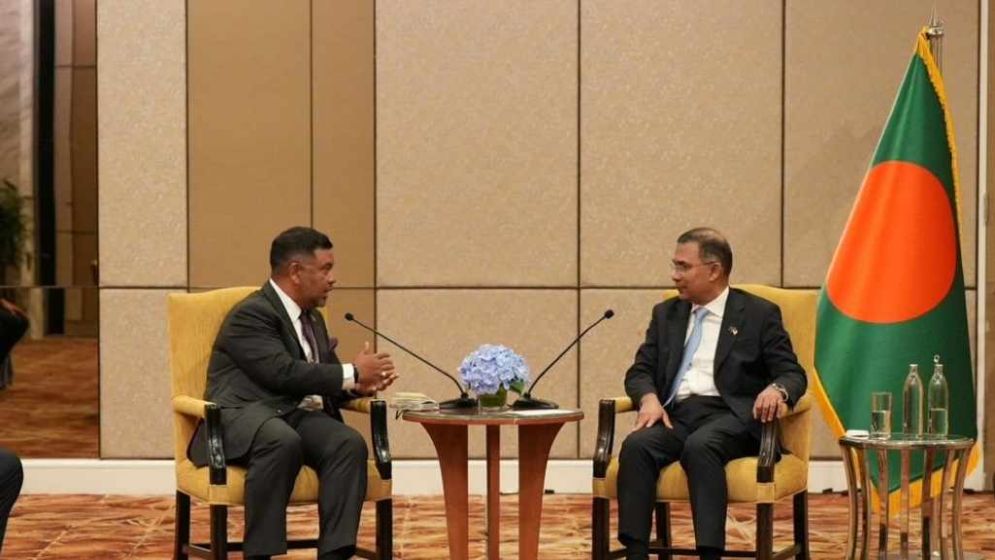
Prime Minister Tarique Rahman held a high-level meeting with Nik Rizal Kamil, the Group Chief Executive Officer and Managing Director of Axiata Group Berhad, on Monday afternoon to discuss expanding foreign direct investment in Bangladesh’s telecommunications infrastructure and accelerating the country’s digital transformation. The meeting, which took place at 2:50 PM local time at the Shangri-La Hotel in Kuala Lumpur, underscored the government’s focus on technological modernization as part of its broader economic agenda.
During the bilateral discussions, the two sides focused heavily on strategic initiatives to enhance digital infrastructure, widen mobile connectivity, and expedite the nationwide commercial rollout of fifth-generation (5G) mobile network services. The implementation of 5G technology is viewed by economic analysts as a critical milestone for Bangladesh, essential for supporting advanced industrial automation, enhancing internet speeds, and fostering smart governance systems.
The Axiata Group leadership expressed strong satisfaction with the newly introduced national budget of Bangladesh, characterizing it as highly investment-friendly. The multinational telecom executive extended appreciation to the Prime Minister for establishing progressive fiscal measures and regulatory policy incentives explicitly structured to encourage foreign investors and minimize institutional bottlenecks. Axiata reaffirmed its long-term corporate commitment to supporting the expansion of the digital ecosystem in Bangladesh through sustained capital deployment.
The engagement carries significant economic weight as Axiata Group Berhad is the parent company of Robi Axiata PLC, one of the prominent mobile network operators driving the telecommunications sector in Bangladesh. Robi’s network serves tens of millions of subscribers across the country, making its parent company a primary stakeholder in the national digital layout. Industry experts note that continuous reinvestment from foreign tech giants like Axiata is vital for maintaining telecom network resilience, expanding coverage to rural frontiers, and building high-speed data architecture.
The meeting occurred on the sidelines of Prime Minister Tarique Rahman’s two-day official state visit to Malaysia, marking his first overseas diplomatic tour since assuming office on February 17, 2026. The invitation, extended by Malaysian Prime Minister Anwar Ibrahim, led to comprehensive bilateral dialogues regarding trade expansion, workforce migration governance, and a fast-tracked Free Trade Agreement (FTA) between the two Asian nations.
According to government officials accompanying the delegation, the administration’s strategy centers on leveraging international diplomatic partnerships to secure robust financial commitments. Prior to the meeting with Axiata, official trade figures revealed that total bilateral commerce between Malaysia and Bangladesh stood at billions of dollars, positioning Malaysia as a premier trading partner in the South Asian region.
The government’s proactive engagement with global telecommunications firms indicates a strategic shift toward establishing a highly competitive digital market. Officials emphasize that the rapid deployment of 5G technology will not only improve consumer telecommunications but will also provide the foundational infrastructure required for the semiconductor industry, financial technology systems, and agricultural modernization frameworks currently being prioritized by the administration.
By creating a stable, predictable, and welcoming regulatory environment, the government aims to attract further foreign direct investment to offset infrastructure development costs. The successful collaboration with Axiata Group is expected to serve as a baseline model for other multinational technology corporations considering entering the Bangladeshi market. Following the conclusion of his brief state engagements in Malaysia, Prime Minister Tarique Rahman departed Kuala Lumpur for an official state visit to China to hold further high-level discussions on infrastructure development, technological cooperation, and regional economic integration.